Skip to content
COMMON GROUNDPeople · Place · Story · Access
Take Part
Open Fenland landscape beneath a broad sky

Be inspired

You don’t need to arrive with a story.

Start with somewhere you know.

Fenland is full of beginnings: a street that changed, a voice you still hear, a shop that disappeared, a journey repeated for years, a photograph in a drawer, a field, a factory, a kitchen, a river, a railway platform, a family phrase. Common Ground helps you notice what might already be a story.

Start with a place

A familiar place can hold more than one version of the past.

You do not need to know the history first. Begin with what you remember, what you notice now, or what you want to ask somebody else.

Look slowly · ask specifically · keep the detail

North Brink beside the River Nene in Wisbech
North Brink, Wisbech — the river, buildings and routes through town can all hold a story.
01

Wisbech

A port town shaped by water, trade, arrival, architecture and generations of everyday life.

  • What has the river carried into or out of your life?
  • Which shopfront or street do you remember differently?
  • Who arrived here, and what did they bring with them?
Start a story from here →
Town Hall and Market Place in March, Cambridgeshire
March Market Place — one view, many possible memories.
02

March

A railway town, market town and meeting place where repeated journeys leave traces.

  • What journey begins or ends at the station?
  • What changed around the Market Place?
  • What do you remember that a photograph cannot show?
Start a story from here →
Whittlesey Market Place
Whittlesey Market Place — public life is often stored in ordinary corners.
03

Whittlesey

Tradition, archaeology, fen landscape and local rituals sit close together here.

  • What survives because somebody keeps doing it?
  • What does the land remember beneath today’s streets?
  • Which local tradition would you explain to someone seeing it for the first time?
Start a story from here →
High Street in Chatteris
High Street, Chatteris — a familiar street can become an archive when somebody remembers it aloud.
04

Chatteris

Workplaces, routes, streets and disappeared infrastructure can unlock stories that maps alone cannot hold.

  • What disappeared but still exists in people’s memory?
  • Where did people work, meet or travel from?
  • Which ordinary building means more to you than it looks?
Start a story from here →
Fenland watercourse near Whittlesey
Across the villages, stories travel along roads, drains, fields, family routes and remembered names.
05

Fenland villages

Manea, Doddington, Wimblington, Elm, Leverington, Friday Bridge, Parson Drove, Coates, Eastrea, Turves, Pondersbridge, Benwick and many more are part of the living map.

  • What does your village know that a visitor would miss?
  • Which route have you travelled hundreds of times?
  • Who remembers the version of this place that is no longer visible?
Start a story from here →
Open Fenland landscape beneath a broad sky
Lives do not stop at administrative boundaries.
06

Around Fenland

Ely, Peterborough, King’s Lynn, Ramsey, Downham Market and other surrounding places may form part of a Fenland resident’s real story. Programme eligibility remains based on living in Fenland.

  • Where do you regularly cross the district boundary, and why?
  • Which nearby place feels connected to home?
  • What journey links Fenland to the rest of your life?
Start a story from here →

Do you remember this?

March station, 1958.

A photograph records what the camera could see. Memory can restore the temperature, noise, waiting, work, excitement and people outside the frame.

What is missing from the picture?Who would have been standing just outside the frame?What could you hear or smell here?What changed first?Who could you ask about it while you still can?
Start a story from this
A train leaving March railway station in 1958
March railway station, 16 August 1958. Ben Brooksbank / CC BY-SA 2.0

Then / now

The same place never stays exactly the same.

These views are from different positions, so we do not pretend they are a perfect overlay. Put them beside one another and notice what persists.

THEN · 1958
March railway station in 1958
March railway station in the age of steam. Ben Brooksbank / CC BY-SA 2.0
LATER · 2010
March railway station and zig-zag canopy in 2010
The station’s distinctive canopy in 2010. Ashley Dace / CC BY-SA 2.0
What endured?What disappeared?Which detail would your younger self notice first?What journey does this place hold for you?

Four archive windows

See the towns at different points in time — without pretending the camera tells the whole story.

Every pairing below is source-linked. Where two images are not the same viewpoint, we say so. Use them to notice change, then take the unanswered part to somebody who remembers.

Wisbech · March · Whittlesey · Chatteris

01

Wisbech

A river street remembered in paint, then seen again in photographs.

The point is not to force a perfect before-and-after. Compare the river edge, building line, movement and atmosphere, then ask what a painting or photograph cannot tell you about living there.

EARLIER VIEW · HISTORIC ARTWORK
Historic painting of North Brink and the old iron bridge in Wisbech
North Brink and the old iron bridge, painted by Herbert Wilson Foster. Herbert Wilson Foster / Wisbech & Fenland Museum / Wikimedia Commons
LATER VIEW · 2018
North Brink outside Peckover House in Wisbech in 2018
North Brink outside Peckover House, photographed in 2018. Richard Humphrey / CC BY-SA 2.0
Story questionWhat has changed around North Brink, and what would only somebody who knew the street remember?Take this into Story Lab →
02

March

The railway can hold work, waiting, departures and homecomings.

These two photographs are close enough in subject to notice change, but still taken from different positions. Treat them as evidence to question rather than a visual trick pretending nothing moved.

THEN · 1958
March railway station in 1958
March railway station, 16 August 1958. Ben Brooksbank / CC BY-SA 2.0
LATER · 2010
March railway station in 2010
March railway station and its distinctive canopy in 2010. Ashley Dace / CC BY-SA 2.0
Story questionWhat does March station mean beyond the trains: work, school, leaving, returning, waiting or meeting somebody?Take this into Story Lab →
03

Whittlesey

Put an old map beside the town you know now.

This is deliberately not an exact then-and-now view: one image is a seventeenth-century map and the other a modern Market Place photograph. The gap between them is the invitation — water, routes, names, settlement and local memory.

LANDSCAPE CLUE · c.1670
Historic map showing Whittlesey Mere around 1670
Whittlesey Mere on a seventeenth-century map. Richard Blome (attributed) / CC BY-SA 2.0
LIVED TOWN · 2011
Whittlesey Market Place in 2011
Whittlesey Market Place, photographed in 2011. J E Harris / public domain
Story questionWhich old route, place-name or landscape feature still shapes your version of Whittlesey?Take this into Story Lab →
04

Chatteris

A disappeared railway can still be part of the town’s mental map.

The station and High Street are not the same viewpoint. Pairing them is about movement through the town: how people travelled, where they met, what became harder, and which routines survived after the line closed.

LOST ROUTE · 1960s
Chatteris railway station in the 1960s
Chatteris railway station before closure in 1967. Lamberhurst / CC BY-SA 4.0
TOWN CENTRE · 2011
High Street in Chatteris in 2011
High Street, Chatteris, photographed in 2011. Stephen McKay / CC BY-SA 2.0
Story questionWho remembers using the railway, and what did its disappearance change in everyday life?Take this into Story Lab →

Story sparks

Sometimes the story starts with a theme, not a title.

Choose the image or question that catches you. You are not choosing your final story — only a doorway into one.

09

Celebrations & traditions

What do local people understand about this tradition that outsiders might miss?

Follow this question →

Small places, big stories

Fenland is more than four towns.

Manea, Doddington, Wimblington, Elm, Leverington, Friday Bridge, Parson Drove, Coates, Eastrea, Turves, Pondersbridge and Benwick belong in the visual record too. These photographs are starting points, not claims that one landmark represents a whole village.

Choose a place · notice one detail · ask one person

Images are credited to their photographers and linked back to the source record. The story belongs to the person who knows the place.

From the outreach

A Fenland artist gave us two ways to look again.

Common Ground asked people who make, notice and tell stories around the Fens to offer one useful creative spark. Artist and sound-maker Nick Tearle responded with a reflection on the scale of the landscape, then shared Waterland as a listening prompt.

01Visual prompt · Nick Tearle

Look at the horizon until the landscape changes scale.

For me the openness and scale of the fenland landscape has a humbling and healing effect on my sense of wellbeing. As clouds drift past overhead and you gaze into the endless unobstructed horizon, you simply can’t help but feel like a small part of nature buffeted and blown around by the cross winds just like the crops in the fields and the birds in the sky.

Shared by Nick Tearle, Fenland artist, alongside his painting Rays of Hope, 2024. Used with Nick's permission.

Take Nick's prompt into Story Lab →
02Listening prompt · Waterland

Distant clouds as “hills with snow on the tops.”

Nick also supplied Common Ground with a private preview from his forthcoming Waterland album. The piece combines ambient synth and distant storm recordings with an interview and poem by Fenland farmer, author and poet Rex Sly.

Music & soundNick TearleInterview & poemRex Sly

The recording itself is not republished here while the album remains unreleased. This page links to Nick's public Waterland project instead.

Fenland now

Not every local story happened fifty years ago.

Nightlife, cars, food, football, fashion, work, dating, gaming and local in-jokes are part of the record too. The everyday present becomes somebody's archive surprisingly quickly.

Story signals happening around us

Follow what people are already doing.

These are dated or current external local sources, not Common Ground events. They are useful because a search for what is happening now can become a doorway into a personal story.

March nights · 2026 snapshot

Soul, reggae, bikes, cars and drag bingo

March Town Council's 2026 calendar shows how many different versions of local culture can sit in one town: music, motor culture, social nights and community events.

Wisbech food · 5 September 2026

The Fens on a plate

Fenland Food Festival brings growers, makers, food businesses and live music together in Wisbech. Food can open stories about work, migration, family, taste and local pride.

Live culture · 2026 snapshot

Comedy, theatre, dance, music and percussion

Local cultural programmes are not only heritage. Contemporary performance and participatory events create fresh memories, communities and stories right now.

Chatteris sounds · current programme

Jazz, opera, bands and community music

Chatteris Music Society's programme is a reminder that ambitious live music belongs in Fenland too — and every audience has its own memories.

Chatteris railway station building in the 1960s
Chatteris railway station, 1960s. Lamberhurst / CC BY-SA 4.0

Do you remember this?

What happens when a route disappears?

Chatteris railway station closed in 1967. A closure can be an infrastructure story, but it can also be a story about a commute, a goodbye, a first trip, a job, or how the town felt before and after.

Who used this route?What journey became harder?What replaced the habit?What detail survives in memory?
Start with the route
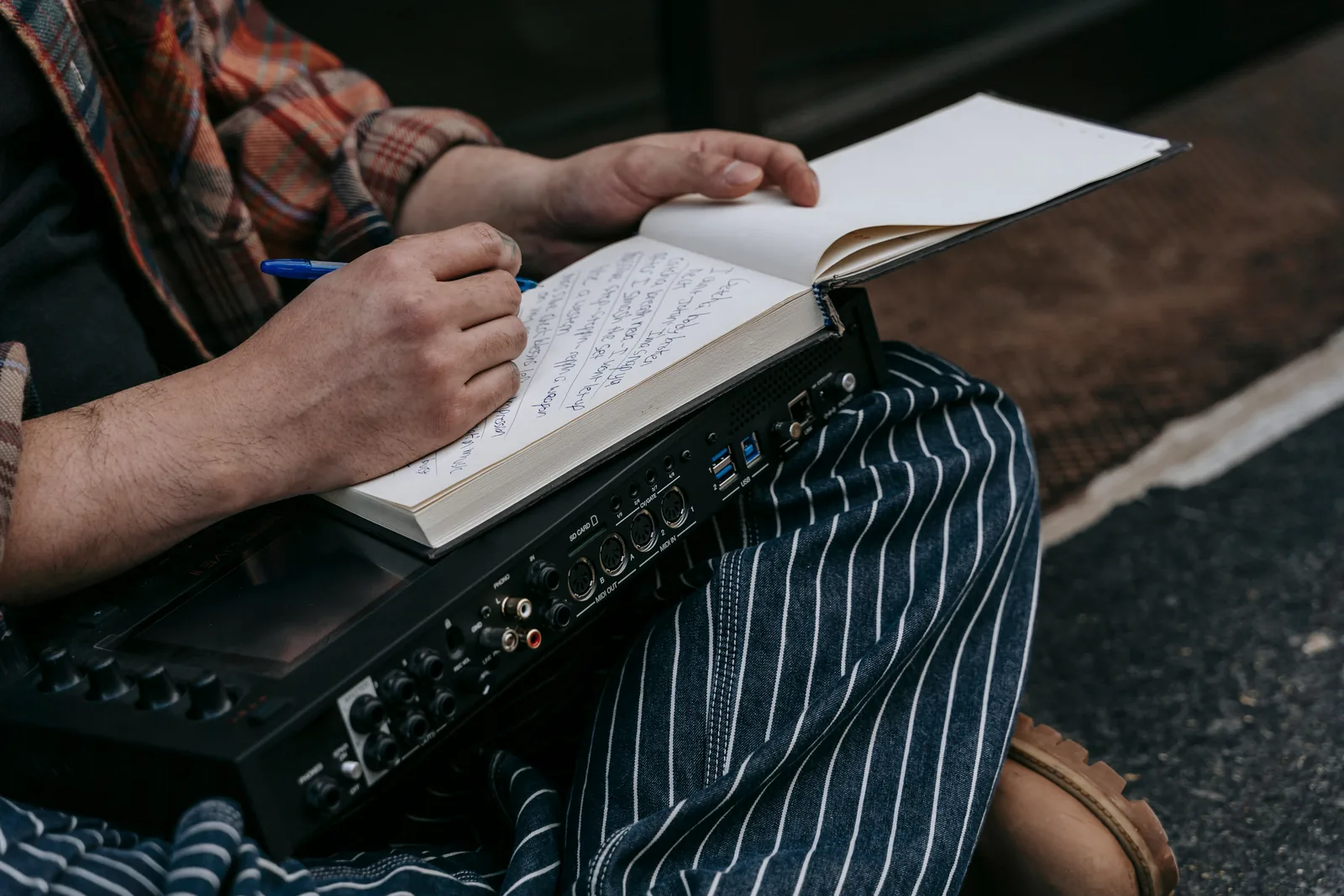
Notebook and storytelling materials on a table
Not museum pieces.Ordinary things with a life attached.

Start with an object

Pick up something small enough to hold.

These are prompts, not participant artefacts. The right object can carry work, migration, family, faith, school, friendship or a daily ritual without trying to tell everything at once.

The Twenty Foot Drain near Whittlesey
The Twenty Foot Drain near Whittlesey. Richard Humphrey / CC BY-SA 2.0

Listen to the place

Record sixty seconds before you decide what it means.

Stand or sit somewhere safe. Notice the closest sound, the furthest sound, what repeats, what interrupts, and what disappears when you start listening for it.

  1. Record or simply listen for one minute.
  2. Name five sounds without judging them.
  3. Circle the sound that most belongs to this place.
  4. Ask what changes if that sound vanishes.
Take the sound into Story Lab →

Before the drains, roads and maps you know

Whittlesey Mere, c.1670.

Old maps can make the familiar landscape strange again. You do not need to become a historian. Ask what the map makes you curious about: water, names, routes, work, land, boundaries and stories passed down.

Start from the map
Historic map showing Whittlesey Mere around 1670
Whittlesey Mere, c.1670. Richard Blome (attributed) / CC BY-SA 2.0

Open the archives

Look for evidence. Then ask somebody what the evidence cannot tell you.

These collections are independent resources. Common Ground links to them for discovery and does not claim ownership of their archive material.

Fenland landscape beneath an open sky

Find the story already there

You only need a beginning.

Take one place, detail, object, sound or question into the Story Lab. If Common Ground feels like the right place to develop it, you can then explore taking part.

Current funded programme

Public funding supports the 2026–27 participant programme.

The current 16-person Digital Storytelling Lab is supported through Arts Council England National Lottery Project Grants. Common Ground is the wider place-based storytelling platform around that funded spine.

Lottery Funded. Supported using public funding by Arts Council England.